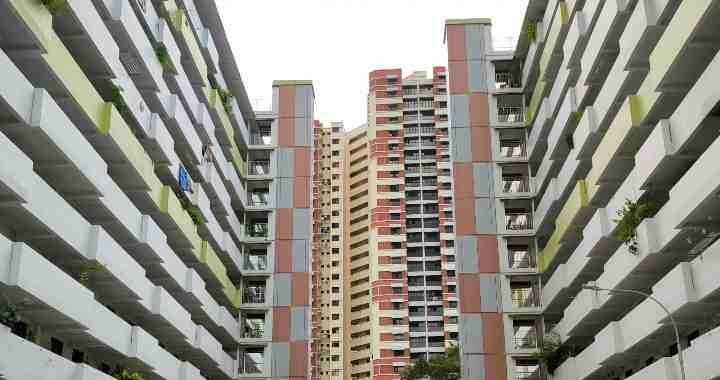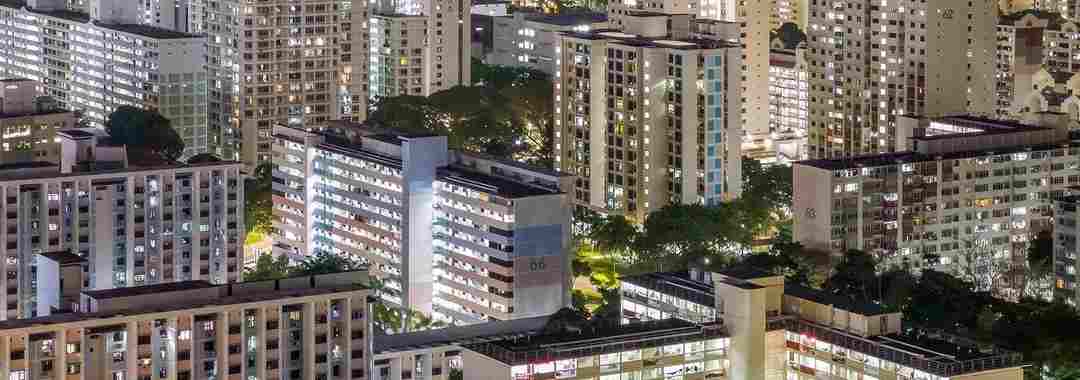
With the new HDB flat classifications, application for BTO flats and their subsequent sale after the Minimum Occupation Period (MOP) will come with tiered buying and selling conditions. This took effect from the BTO sale in October 2024.
Effectively, this has ended the classification of HDB housing estates as mature and non-mature that was introduced in 1992. The previous classification was dependent on the availabiity of land for public housing developmen.
The changes were first announced at the National Day Rally (NDR) on 21 August 2023 by former Prime Minister Lee Hsien Loong.
The new HDB flat classifications reflect more accurately the locational attributes of new HDB flats while pricing them more equitably to advance Singapore’s public housing policies, ensuring they meet the following three objectives:
- Promote home ownership affordability for all income groups by providing additional subsidies for Plus and Prime flats and implementing a subsidy recovery mechanism.
- Foster a diverse social mix across different locations by making a range of flat types available in various locations and implementing income ceilings for resale, Plus and Prime flats.
- Establish a fairer system for all buyers by balancing subsidies with resale restrictions and ensuring equitable access to housing options.
New HDB Flat Classifications Account for Evolving Housing Landscape
These new HDB flat classifications come into effect as the distinction between mature and non-mature estates has gradually blurred over the years, with the latter having evolved into thriving housing estates complete with modern amenities and greatly improved transportation infrastructure.
These towns, once considered “ulu” (Malay for being far-flung), have now benefitted from substantial government investments that have significantly improved their overall infrastructure. For example, shopping malls, hawker centres, medical facilities, hawker centres, schools and many other essential amenities are within convenient access.
In addition, the expansion of the MRT network across the island has brought the suburbs closer to the city and key employment nodes.

Distribution of Standard, Plus, and Prime HDB Flats
Unveiling the Plus HDB Flat Classification: A New Differentiation
Prime Minister Lee's announcement has effectively redefined the landscape of public housing policies. Due to the scarcity of undeveloped land in Singapore, more public housing will be built within or near existing estates and in more central areas.
As these new flats in choice locations tend to be more popular and would be priced higher, these new HDB classifications seek to ensure homes remain affordable and accessible – both at the initial purchase from HDB and on the resale market.
Below, we will highlight some of their key features.
Standard HDB Flat Classification: A Foundation of Choice
Standard flats will continue to account for the bulk of the supply of HDB flats. They will come with standard subsidies and restrictions for the application of all BTO flats. These flats will come with the standard 5-year minimum occupation period (MOP) and have no restrictions on the pool of resale buyers. These flats will continue to cater for the majority of Singaporean families and eligible applicants.
Plus HDB Flat Classification: Enhanced Accessibility
This new category of flats will be located in choicer locations within each region across Singapore, but not in central locations. For example, they may be near an MRT station, town centre, and major shopping centres. One of the areas where Plus HDB flats will be offered will be in the upcoming Bayshore housing precinct where it will be close to amenities such as MRT stations, a community club and East Coast Park.
Plus HDB flats will be offered with more subsidies - more than Standard HDB flats but less than Prime HDB flats. However, they will be subjected to tighter ownership restrictions compared to the Standard BTO flats.
They will come with a 10-year MOP, a $14,000 income cap for both families and singles (including resale), cannot rent out entire flats even after MOP, and only Singaporeans can buy in the resale market. There will also be a clawback in subsidies, but it is expected to be lower than Prime HDB flats as the additional subsidies are less.
Meanwhile, private homeowners who sold their properties will have to fulfil a 30-month wait-out period before they can buy a resale Plus flat. This is twice the time that such owners are currently required to wait out to buy a standard resale flat today.
Prime HDB Flat Classification: Living In Central Regions
Prime HDB flats will have the same conditions as flats currently offered under the Prime Location Housing (PLH) scheme, which was introduced in November 2021.
These include a 10-year minimum occupation period and a subsidy clawback clause when the first owners sell their flats. The percentage of clawback will be commensurate with the extent of the additional subsidy provided.
They can also only sell their flats to buyers who meet BTO eligibility conditions, including an income ceiling of S$14,000 for couples or families and S$7,000 for singles. Additionally, owners of PLH flats may rent out spare bedrooms, but not the whole flats even after the MOP.
Rules on New HDB Flat Classifications
| New HDB Flats Classifications | |||
| Flat Type | Location | Subsidies | Restrictions |
| Standard HDB Flat | The majority of the supply is in all regions of Singapore, except central locations. | Standard amount ($). |
|
| Plus HDB Flat | In choice locations across all regions near transport nodes, town centres and shopping areas. | More subsidies ($$) than Standard flats but fewer than Prime flats. |
|
| Prime HDB Flat | The choicest and most central locations encompassing the city centre and their surrounding towns, including the Greater Southern Waterfront area. | Most subsidies ($$$). |
|
More Choices for Single Singaporeans
At the same time, the rules for single Singaporeans applying for a BTO flat or to purchase a resale HDB flat have been relaxed.
Previously, first-timer singles aged 35 and above were only allowed to apply for new 2-room Flexi flats in non-mature estates or buy resale flats in any estate.
However, with the new HDB flat classifications, these eligible first-timer singles can now:
- Apply for 2-room Flexi BTO flats in all locations across Standard, Plus and Prime housing projects;
- Buy a Standard or Plus flat (except 3Gen) of any size in the resale market; or
- Buy a 2-room Prime flat in the resale market.
These changes follow feedback that a growing number of singles prefer to buy and live in their own flats instead of with their families. Some have also indicated their preference for flats in mature estates so that they can be closer to their elderly parents for mutual care and support.
Effects of New HDB Flat Classifications
These new HDB flat classifications will likely lead to changes in buying behaviours. Although the government is seeking to make more choice flats affordable to as many Singaporeans as possible, they will have to reciprocate by owning them for a longer period before selling them.
The new HDB flat classifications and stricter ownership criteria are clearly a policy attempt by the government to eliminate property speculation while helping to stabilise the HDB market, especially given the increasing number of million-dollar HDB resale flats that have been transacted.
Wielding together with measures such as the Mortgage Servicing Ratio (MSR), which caps HDB flat financing at 30% of one's monthly household income (compared to 55% for TDSR for private property financing), the capital appreciation potential of HDB flats could be curtailed.
Consequently, this could also have a price-capping effect on Standard HDB flats.
Hence, this may nudge potential homebuyers towards executive condos and private properties as a preferred investment choice due to their less stringent ownership and resale criteria.
Conclusion
Recognising that Prime and Plus HDB flats possess inherent market value due to their premium or more desirable locations, the government is acting proactively to ensure affordability for a larger spectrum of homebuyers. Also, these new HDB flat classifications aim to prevent social stratification where only the well-off can afford them.
To achieve this, buyers of Plus HDB flats will get more subsidies than those of Standard HDB flats, but less than those of Prime HDB flats. This will help moderate the prices of Plus and Prime HDB flats, making them more affordable for a larger segment of flat applicants. However, they will still cost more than Standard HDB flats.
At the same time, the resale conditions attached to these flats will moderate their prices to help maintain a better social mix in the longer term. However, this raises the question of whether HDB flats can be a viable long-term asset where their potential price growth could be curtailed.
Besides the subsidy clawbacks and longer MOPs, purchasers of resale Plus and Prime HDB flats must also meet a $14,000 monthly household income ceiling.
Summary: Pros and Cons of Standard, Plus, and Prime HDB Flats
Each type of HDB flat caters to different needs and budgets. Standard flats are best for budget-conscious buyers and those needing housing urgently. Plus flats offer a mid-range option with better amenities, while Prime flats provide premium living in central locations with easy access to abundant amenities.
Understanding these distinctions can help buyers make informed decisions based on their needs and financial situation.
However, the long-term effects of this new system remain to be seen. It will take several years for the first batch of Plus and Prime flats to reach their MOP and enter the resale market. At that point, a clearer picture of the impact of the new classification on the overall housing market will emerge.
Meanwhile, below is a quick overview of the pros and cons of the different flat types.
| Flat Classification | Pros | Cons |
| Standard HDB Flat |
|
|
| Plus HDB Flat |
|
|
| Prime HDB Flat |
|
|
Types of HDB Flats Available
The following are the types of flats available. Each flat type caters to different household sizes and budgets.
- 2-Room: Suitable for lower-income households, seniors, and singles. Available only in open market.
- 2-Room Flexi: Allows seniors to opt for shorter leases to reduce flat prices. Available in both HDB and open market.
- 3-Room: Offers a compact living space for small families. Available in both HDB and open market.
- 4-Room: Ideal for young couples or parents. Available in both HDB and the open market.
- 5-Room: Great for larger households of 5 or more members. Available in both HDB and the open market.
- 3Gen: Designed for multi-generation families. Available in both HDB and the open market.
- Executive: Largest of all HDB flats with additional space for a study &/or balcony. Available only in the open market.
- Executive Maisonette: Larger, multi-level units with more space. Available only in the open market.
- Community Care Apartments: Senior-friendly housing with integrated care services. Available only through HDB.
Market Update (October 2024 - December 2025): How HDB Flat Classifications Impact Buying Decisions
Following the implementation of the new HDB flat classification since the October 2024 BTO launch, the demand for prime HDB flats remains strong and oversubscribed. However, application rates have eased as overall BTO and SBF (Sale of Balance Flats) supply increased in 2024–2025, especially in top locations.
Buyers are now more selective across Prime, Plus and Standard projects, placing greater weight on location strength, flat size and resale flexibility, with Plus flats seeing the most uneven demand.
Demand trends
-
Prime projects (ex‑PLH or Prime Location Housing) in central and city-fringe areas like Kallang/Whampoa, Bukit Merah and Queenstown still attract more applicants than available units, but application rates are lower than early PLH launches in 2021–2022.
-
New Prime BTO launches such as Tanjong Rhu Riverfront I & II and Bukit Merah’s Berlayar Residences and Redhill Peaks recorded reduced first- and second-timer application rates compared with River Peaks, King George’s Heights and Bukit Merah Ridge offered between 2021-2022.
-
Standard flats in mature estates with good transport links and larger five-room units, such as Costa Riviera in Pasir Ris, continue to see strong demand, often outperforming Standard projects in less established locations.
-
Plus flats show uneven demand: strong in well-connected areas like Kembangan/Bayshore in Bedok, but weak where location is less compelling, such as Oak Ville @ AMK with sub‑1.0 first-timer application rate.
Supply conditions
-
From October 2024 to December 2025, HDB has launched 28,296 BTO flats, with more than half being Standard flats and the rest split between Prime and Plus, of which about three in five are Prime.
-
The Government significantly ramped up both BTO and Sale of Balance Flats supply in 2024–2025, with one exercise (July 2025) offering over 10,000 units versus under 4,000 in February 2022.
-
This higher supply, including in previously highly contested central and city-fringe estates, has moderated application rates even for the most popular Prime projects.
Market conditions
-
The new Prime–Plus–Standard framework, with 10‑year minimum occupation periods and subsidy clawbacks of 6–14% for Prime and Plus, is explicitly aimed at tempering speculative demand and keeping attractive locations affordable.
-
Despite lower application rates, prime-location projects remain oversubscribed, indicating resilient underlying demand in choicest areas even as supply expands and rules tighten.
-
The classification shift from “mature/non‑mature” to Prime/Plus/Standard is channelling some demand towards well-located Standard projects that do not carry the stricter resale conditions of Prime and Plus.
Buyer sentiment and behaviour
-
Application patterns suggest buyers remain drawn to convenience, centrality and MRT proximity, but are more price- and policy-sensitive under the new framework.
-
Many applicants appear to view Prime flats as long-term homes rather than short-term investments, consistent with acceptance of longer MOP and clawback conditions in strong locations.
-
For Plus projects, buyers are more cautious about accepting tighter resale rules unless the location premium is clear; weaker take-up in Ang Mo Kio versus strong interest in Bedok/Bayshore reflects this differentiation.
-
Overall sentiment can be characterised as selective but steady: demand focuses on projects that combine strong location, reasonable conditions and desired flat sizes, rather than determined by their classifications.
If you have any questions about HDB flats or Singapore's property market, please WhatsApp Me.