- Why the Excitement Over The Greater Southern Waterfront Transformation
- Major Redevelopment Zones in Greater Southern Waterfront
- Housing Supply from En Bloc Redevelopments
- Sustainability And Heritage In Greater Southern Waterfront Development
- Greater Sentosa Master Plan
- Transport Connectivity Improvements
- The Greater Southern Waterfront Property Market Outlook and Investment Opportunities
- Frequently Asked Questions (FAQs)
- Review of New Property Launches
The Greater Southern Waterfront
In this Greater Southern Waterfront development review, learn about one of Singapore’s most ambitious long-term redevelopment plans to reshape the southern coastline into a vibrant live-work-play district and an emerging property hotspot with strong investment potential.
Spanning about 2,000 hectares across 30km of coastline, it will gradually unlock new housing, commercial spaces, lifestyle attractions, parks, and transport links over the next two to three decades.
When the Greater Southern Waterfront was first announced in 2013, it immediately drew attention from property investors, developers, and homeowners because a major urban transformation of this scale tends to have a powerful ripple effect on surrounding property values.
As the area is refreshed and new projects are launched at higher benchmark prices, nearby developments can benefit from stronger investment sentiment and improved long-term prospects.
Why the Excitement Over The Greater Southern Waterfront Transformation
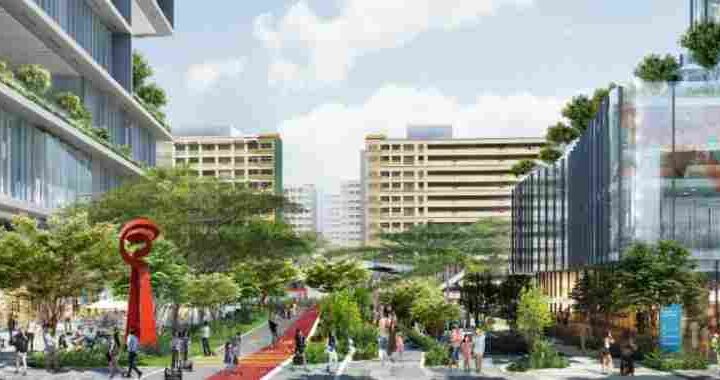
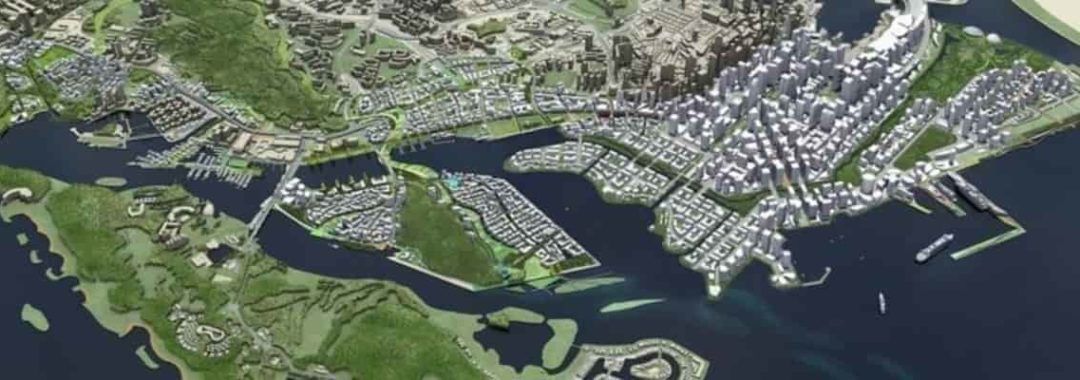
The Greater Southern Waterfront represents more than just land redevelopment; it is a strategic effort to extend Singapore’s city centre southward and create a more vibrant urban core.
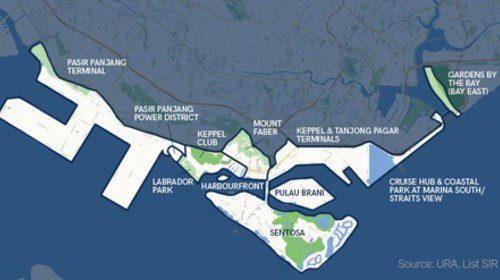
The project will span key areas such as Marina South, Tanjong Pagar, Keppel, Harbourfront, Sentosa, Labrador Park, Pasir Panjang, and all the way to West Coast Park, linking them into a more cohesive and attractive waterfront district.
One of the main objectives behind the GSW is “decentralised re-centralisation,” which aims to bring life back into the central region after office hours by integrating homes, offices, retail, recreation, and lifestyle offerings.
This helps eliminate the one-dimensional, purely commercial CBD and instead creates a more balanced and socially active neighbourhood.
Major Redevelopment Zones in Greater Southern Waterfront
With the Greater Southern Waterfront spanning 30km along Singapore’s southern coast, specific areas have emerged as leading development zones. These include the following:
Marina South
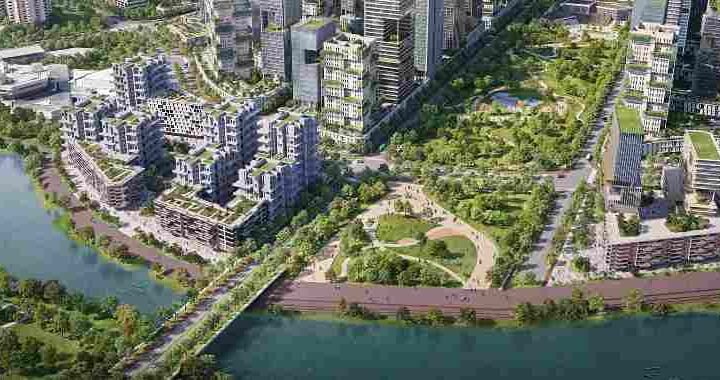
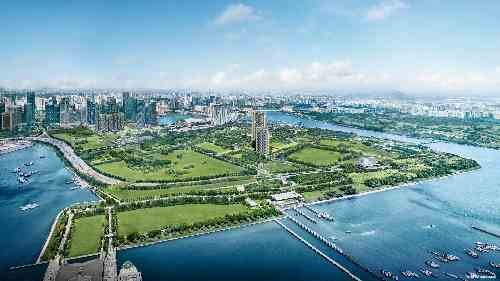 Under the URA Master Plan, the 45-hectare Marina South precinct is envisioned as a sustainable, car-lite, 10-minute mixed-use neighbourhood featuring over 10,000 new homes. Following the launch of One Marina Gardens, 15 more land plots are earmarked for private and public housing.
Seamlessly integrated next to Gardens by the Bay, this eco-friendly district prioritises pedestrian-first streets, green corridors, extensive cycling infrastructure, and seamless MRT connectivity.
All developments must meet strict green standards, incorporating native biodiversity, wind-channelling architecture, and eco-friendly systems to create a climate-resilient urban village.
These developments matter for property investors because they can materially improve the precinct’s appeal, making it a more vibrant, future-ready mixed-use district instead of a typical residential enclave.
New Wellness Attraction and Major Commercial Developments
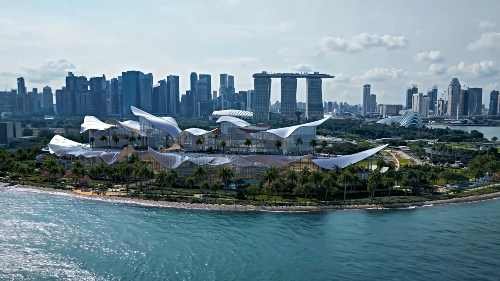
Therme Singapore
A major new attraction, Therme Singapore, is slated to open in 2030. It will be the first dedicated large-scale wellness facility to be built. Located next to Gardens by the Bay and Marina Barrage, it will offer more than 20 pools and water features, and over 70 wellness treatment rooms.
This wellness attraction will fit well into the URA’s vision to draw activity into the precinct after office hours, complementing the residential and commercial developments already underway nearby.
In addition to Therme Singapore, an integrated cruise and ferry terminal and a MICE hub will also be developed at Marina South. To be completed in the 2030s, they will bolster Singapore’s position as a global tourism and business nexus, attracting high-value visitors.
These developments will reinforce Marina South’s position as one of the earliest and most important precincts to take shape within the broader GSW transformation.
Therefore, recent new property launches in the area, such as One Marina Gardens, W Residences Marina View, and Newport Residences, will stand to benefit significantly when these developments take shape.
Housing from Land Released from Former City Port Terminals
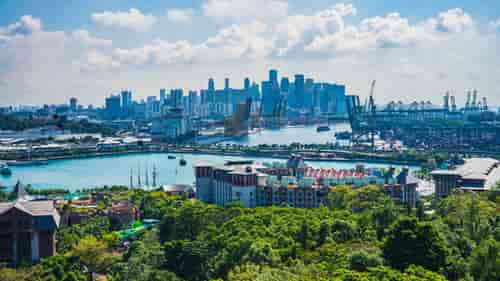
Pulau Brani
A key part of the transformation lies in the redevelopment of former port terminals. The relocation of the Tanjong Pagar, Keppel, and Pulau Brani terminals to Tuas by 2027 will free up substantial land for future use, while the Pasir Panjang Terminal is expected to be vacated by 2040.
In total, around 1,000 hectares of land will eventually be released for redevelopment, with plans to build public and private waterfront homes, expand the Central Business District, and create a car-lite, eco-friendly district with advanced coastal protection features.
Housing at Former Keppel Club Site
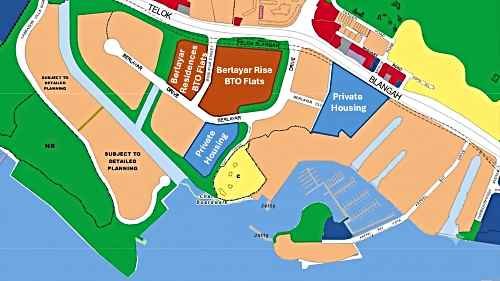
Public and Private Housing Sites
The former Keppel Club site is another major focal point, with plans to develop around 9,000 to 10,000 new homes comprising a mix of HDB flats and private residences. Supported by greenery, waterfront views, and close proximity to two MRT stations – Telok Blangah and Labrador Park - they are expected to appeal to both homebuyers and investors.
So far, four projects have been launched – two private and two public.
Private Housing Developments at Former Keppel Site
For private housing, the first government land sale (GLS) site was awarded to the Kingsford Group in November 2025 at a land cost of $1,326 psf ppr. The 147,346 sq ft site is expected to yield approximately 745 units.
The second site was launched in May 2026 under the 1H2026 GLS Programme. Spanning 271,932 sq ft, it is expected to yield about 415 private homes. The tender for this site is currently underway and is set to close on August 4, 2026.
Public Housing Developments at Former Keppel Site
For public housing, the first BTO launch is Berlayar Residences in October 2025. It offers 870 units across 2-room Flexi, 3-room, and 4-room flat configurations, as well as 200 public rental units.
The second BTO launch is Berlayar Rise in June 2026. It offers a massive 1,976 units of 2-room Flexi, 3-room, and 4-room flats) spread across 6 residential blocks reaching up to 49 storeys high.
Both projects, under the Prime category, which comes with a 10-year MOP and subsidy clawback. But they did not deter HDB flat applicants, as witnessed by the high oversubscription rates.
Future Public and Private Housing Developments at Gillman Barracks
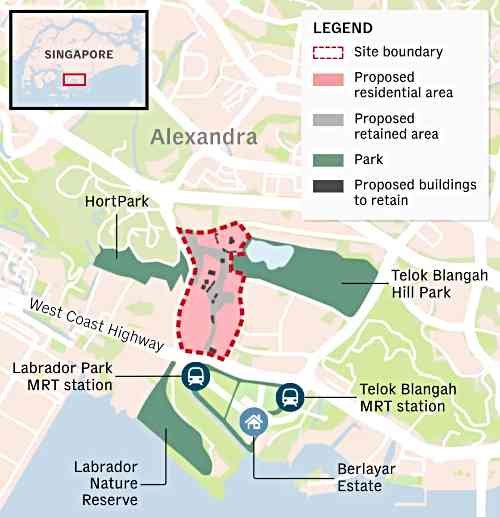
Future Housing Site at Gillman Barracks
The Housing and Development Board (HDB) plans to build a new residential estate at Gilman Barracks, featuring both public and private homes. The development will be "designed around nature," integrating ecological and heritage considerations.
Distinguishing features: This will include retention of key natural elements. Plans propose safeguarding most of the native-dominated secondary forest and a forest stream that supports species of conservation significance, such as the straw-headed bulbul and bamboo bat. To maintain ecological connectivity, agencies will protect corridors with a minimum width of 30 metres, linking the site to the broader Southern Ridges network. A green link with native species is also planned at the southern tip.
In terms of heritage, out of 86 buildings assessed, over 20 are proposed for retention. Government agencies plan to largely preserve four clusters considered most historically and architecturally significant: the housing and school clusters at Preston Road, and the clusters at Lock Road and Malan Road. These retained buildings could be repurposed for commercial and community amenities.
Timeline: Specific details regarding the number of housing units, flat classification, and the development timeline have not been finalised as studies and public feedback are still ongoing. As current arts and F&B tenants at Gilman Barracks have tenancies expiring progressively by the second quarter of 2030, new housing developments are likely to be available in the next one or two decades, at the earliest.
Housing Supply from En Bloc Redevelopments
New private housing supply is expected to be driven predominantly by the Government Land Sales (GLS) programme, which will remain the primary and predictable source for residential development.
While en bloc redevelopments may add to new housing supply, their contribution is likely to be limited due to strict regulatory requirements, difficulty in securing majority owner consensus and pricing expectations, which constrain the success of such transactions.
That said, many ageing freehold developments in the Pasir Panjang and West Coast areas could emerge as potential en bloc candidates over time when rising maintenance costs become increasingly unsustainable.
In the past decade, developments that succeeded in en bloc sales are:
- The Hillshore (former Gloria Mansion, January 2022).
- Terra Hill (former Flynn Park, September 2021).
- Harbour View Gardens (retained the same name, February 2018).
- Kent Ridge Hill Residences (former Vista Park, December 2017).
- The Verandah Residences (former Redwood West, July 2017).
Sustainability And Heritage In Greater Southern Waterfront Development
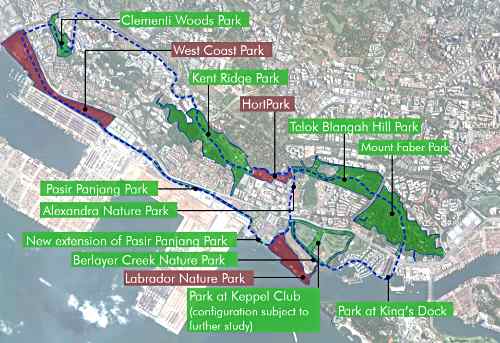
13 Nature Parks in Singapore's Southern Region
A major distinguishing feature of the GSW is the incorporation of green corridors, waterfront promenades, coastal resilience measures, and multiple parks, making it one of Singapore’s most environmentally integrated master plans.
Four new parks under the Labrador Nature Park Network will improve biodiversity and green connectivity across the southern region. Each will also serve a different recreational and ecological role, and they include:
- Alexandra Nature Park.
- Berlayer Creek Nature Park.
- Park at Keppel Club.
- Park at King’s Dock.
At the same time, the authorities are also looking to preserve selected heritage and industrial structures, including the Prima Flour Mills, some of the wharves of the former port terminals, and the Pasir Panjang Power District.
The aim is to retain the area’s character while preventing GSW from feeling overly generic or disconnected from Singapore’s maritime history.
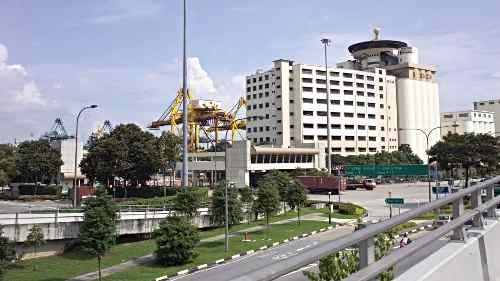
Prima Flour Mills and Wharves at the Greater Southern Waterfront
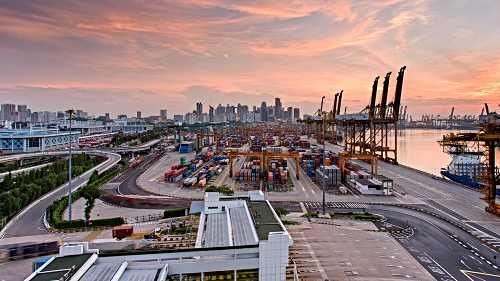
Wharves at Keppel Harbour
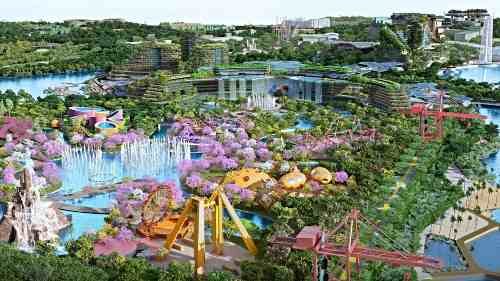
Greater Sentosa Master Plan
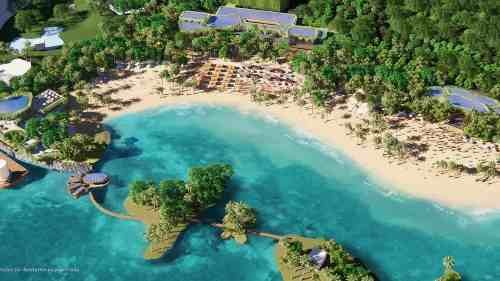
Rejuvenated Beaches at Sentosa
Transport Connectivity Improvements
Improved transport infrastructure plays a pivotal role in supporting and accelerating the development of the Greater Southern Waterfront (GSW).
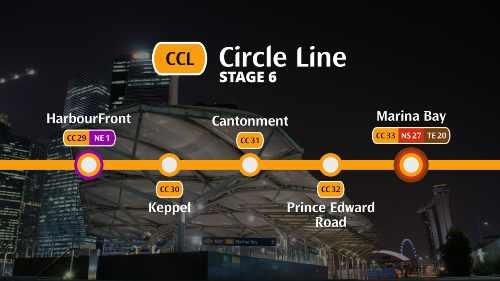
Completion of Circle Line Stage 6
The opening of Circle Line Stage 6 on July 12, 2026, comprising Keppel, Cantonment, and Prince Edward MRT stations, will fully close the loop between HarbourFront and Marina South Pier. This will significantly improve access along the southern corridor and link it more closely to key business and lifestyle nodes.
These three MRT stations can also unlock more development potential in their surrounding areas. These may include the Keppel Distripark opposite the Keppel MRT station. Currently, the site is zoned “subject to detailed planning”, meaning the URA has yet to finalise its land use.
Future MRT Connectivity
In the longer term, transport connectivity will be strengthened further with the development of the West Coast Extension, which is expected to connect the Jurong Region Line to the Cross Island Line and the Circle Line in the late 2030s and 2040s.
This will further enhance the Greater Southern Waterfront's accessibility to Singapore’s broader network of employment and residential districts, including the Jurong Lake District.
The Greater Southern Waterfront Property Market Outlook and Investment Opportunities
The development of the Greater Southern Waterfront (GSW) will create a significant investment opportunity, driven by key economic and urban planning initiatives.
The expansion of business infrastructure, driven by established hubs like Mapletree Business Centre, Alexandra Technopark, and the new Labrador Tower, will attract more multinational corporations to the area while extending Singapore’s economic base beyond the traditional Central Business District.
This will stimulate job creation and spur demand for residential properties in the surrounding areas.
Furthermore, the Greater Sentosa Master Plan, designed to enhance tourism, lifestyle, and entertainment, will boost the hospitality and retail sectors. The resulting increase in economic activity can be expected to bolster the appeal of surrounding residential properties.
The phased nature of the GSW's development, combined with substantial infrastructure investment and its strategic coastal location, will offer favourable long-term property investment opportunities.
Nevertheless, for homebuyers and investors, the key is to look beyond GSW’s broad narrative and focus on how each precinct will evolve in phases. Areas with early infrastructure, stronger transport access, and first-mover advantage are likely to benefit the most as the broader transformation unfolds.
Frequently Asked Questions (FAQs)
What is the Greater Southern Waterfront (GSW)?
The GSW is a major government project to transform Singapore's southern coast into a new gateway for living, working, and recreation. It will encompass 30km of coastline and 2,000-ha of land, stretching from Gardens by the Bay East to Pasir Panjang and West Coast Park.
How big is the Greater Southern Waterfront?
The GSW is a 2,000 hectare project, which is six times the size of Marina Bay. It is also twice the size of the Punggol housing estate.
How will the GSW become a property hotspot?
The GSW is a monumental redevelopment that will free up 1,000-ha of prime land by relocating the city's port. In addition, up to 10,000 public and private homes are planned for Marian South, which will be developed into a sustainable district, supported by walking and cycling trails alongside commercial and lifestyle attractions.
What is the Greater Sentosa Master Plan?
The Greater Sentosa Master Plan aims to integrate the two islands, Sentosa and Pulau Brani, into a single world-class leisure and tourist resort. Pulau Brani, renamed as Downtown South, will be transformed into an entertainment and lifestyle hub with new attractions.
How will transportation connectivity be improved?
The final Stage 6 of the Circle Line (CCL6) to complete the loop will be operational from July 12, 2026, enhancing connectivity between key business and lifestyle hubs. There are also plans to connect the West Coast station on the Jurong Regional Line with the Cross Island Line and Circle Line by the late 2030s and 2040s, respectively.
What is the timeline for the port relocations?
The City Terminals (Tanjong Pagar, Keppel, and Brani) will be vacated by 2027, and the Pasir Panjang Terminal will be vacated by 2040. This relocation will free up approximately 1,000-ha of land for redevelopment.
How is the GSW being developed sustainably?
The GSW is a multi-decade project to create a sustainable, integrated urban ecosystem. The plan includes integrating lush green spaces, creating a well-connected public transportation network, and preserving natural habitats. It will also feature four new parks under the Labrador Nature Park Network.
Besides the Greater Southern Waterfront, the other property hotspots in Singapore include the following:
- Jurong Lake District
- One-North
- Woodlands Regional Centre
- Novena
- Tampines Regional Centre
- Tampines North
- East Region
- Bayshore & Long Island
Review of New Property Launches
For review of new property launches, please click on the links below. More project information can also be found here.
- Property Launches in Core Central Region (CCR)
- Property Launches in Rest of Central Region (RCR)
- Property Launches in Outside Central Region (OCR)