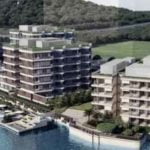
This is a review of Piccadilly Grand Condo, a 99-year leasehold mixed-use development in Singapore’s District 8. Located at the fringe of the city along Northumberland Road and directly linked to the Farrer Park MRT station, it is only 6 minutes’ walk to City Square […]
Continue readingCategory Archives: New Launches – Insight and Investment Analysis

Singapore’s residential property market is subdivided into three main regions: the Core Central Region (CCR), the Rest of Central Region (RCR), and the Outside Central Region (OCR).
Each offers unique characteristics that cater to different buyer profiles, whether for own stay or investment.
Receiving detailed new launches insight and investment analysis is crucial to making an informed decision. As each region presents its own mix of opportunities and trade-offs, understanding the factors that drive market performance will help you to identify developments offering stronger long-term growth potential.
In Singapore’s new launches market, demand is driven by a combination of factors, which include location, pricing, government policy, overall housing trends, and the state of the economy.
With so many variables at play, it’s important to assess each new project on its own merits and how well it aligns with your personal or investment objectives. By receiving reliable new launches insight and investment analysis, it can help cut through the noise and focus on what truly matters for long-term returns.
Below, we share updates on how the market has performed across the CCR, RCR, and OCR, drawing on the latest new launches insight and investment analysis to highlight key trends influencing demand and investor decisions.
We also look at the pros and cons of buying new-launch properties, and where the property hotspots are.
If you want to assess whether a private residential property – new launch or resale – offers good investment potential, you can request a free copy of our PrimeKey Analysis Report. This proprietary, data-driven framework evaluates eight essential market variables to provide a clear investment grade. These include:
- Distance to the nearest MRT station
- Growth hotspots
- Government Land Sales and upcoming supply
- Project size
- Remaining tenure
- Nearby primary schools
- MOP clusters (HDB upgrader demand)
- Rental demand and yield potential
Understanding the New Launch Market
New launch properties include private condominiums and executive condominiums sold by developers before or during construction. These projects have often attracted strong interest because they offer early access to unit selection, a brand-new living environment, and structured payment terms.
Another key draw for many buyers is the ability to purchase units at “early-bird” or preferential launch prices.
Developers typically employ a tiered pricing strategy, incrementally raising prices after a certain percentage of units are sold. This approach serves a dual purpose – it sustains upward price momentum within the development while simultaneously rewarding early buyers, who stand to realise capital gains on subsequent upward price revisions.
Nevertheless, new launches require careful analysis as buyers are not purchasing a completed home. Instead, they are committing based on floor and site plans, show flat models, developer reputation, site location, and market expectations.
This introduces a certain degree of risk as things may not turn out as expected. At the same time, launch pricing plays an important role in determining a project’s long-term success in the resale market. If priced too high compared to the surrounding properties, this could adversely affect capital appreciation and exit strategy.
The Role of New Launches in Singapore’s Residential Property Market
New launches play an important role in Singapore’s housing market because they reflect current buyer sentiment while shaping future supply conditions.
Project prices are shaped by factors such as land acquisition costs, government planning objectives, and nearby infrastructure projects, as well as each developer’s market outlook and sales strategy.
There are several reasons why new launches tend to attract attention:
- They often set new price benchmarks for their neighbourhoods.
- They show how much buyers value location, convenience, and lifestyle.
- They give a sense of demand across different market segments.
- They highlight price differences between projects in the CCR, RCR, and OCR.
For investors, new launches can present attractive opportunities for price growth during the construction period, especially when underlying demand remains positive and is underpinned by strong economic and market fundamentals.
Buyers also get an early advantage – the chance to pick from the best units before the rest of the market moves in. But ultimately, investment returns will also depend on entry pricing, time of entry, and how the broader market performs by the time the project reaches completion.
Core Central Region (CCR) Properties: The Prestige Segment
The Core Central Region (CCR) remains the most prestigious part of Singapore’s private housing market. It includes prime districts such as Districts 9, 10, and 11, encompassing major city locations like Orchard Road, Tanglin, Bukit Timah, and the Downtown Core.
CCR projects often appeal to buyers, especially the wealthy, who value:
- Prime location.
- Strong prestige and status.
- Limited land supply.
- Long-term capital preservation.
- A more central and urban lifestyle.
Recent launches in this region have shown that demand can still be healthy when pricing is competitive. Projects such as Skye At Holland, Upperhouse At Orchard Boulevard, River Green, and The Robertson Opus have drawn strong interest from buyers who believe in the long-term investment prospects of prime districts.
They were also attracted by the considerable narrowing of the price gap between CCR and other regions in the last few years.
That said, CCR also comes with clear challenges. Prices are high, and investment returns may rely more on long-term holding than quick resale gains. The segment is also more sensitive to foreign demand and policy changes, especially after repeated increases in Additional Buyer’s Stamp Duty for foreign purchasers, which currently stands at a hefty 60%.
CCR Investment Appeal
- Best suited for buyers seeking prestige and capital preservation.
- Stronger for long-term legacy ownership than short-term speculation.
- Demand may improve when pricing converges with RCR.
- Higher entry prices mean lower margin for error and lower rental yield.
Rest of Central Region (RCR) Properties: The Mid-Tier Segment
The Rest of Central Region (RCR), commonly referred to as the city fringe, occupies a middle ground between the prestige of prime central living and the affordability of the suburban market.
It includes areas such as Queenstown, Katong, Bishan, and Toa Payoh. This region has become increasingly popular because it offers a practical mix of access, convenience, and relative value.
RCR new launches appeal to:
- Those seeking a more central location with enhanced amenities and convenience.
- Young professionals and couples drawn to shorter commutes into the city.
- Existing private homeowners looking to right-size or move closer to the city.
- Proximity to the Central Business District and major employment hubs
RCR properties are attractive to both owner-occupiers and investors because they are often located near business districts, employment nodes, and enjoy good transport links, while still being priced below CCR. This makes the segment especially appealing for buyers who want central convenience without paying premium prices for prime district properties.
Recent launches such as Penrith, Zyon Grand, Promenade Peak, Lyndenwoods, and Bloomsbury Residences reflect the continued appeal of this segment. Buyers are drawn to them because they are more affordable than CCR properties while still offering a well-supported location and lifestyle, along with attractive rental yields.
RCR Investment Appeal
- Offers a good balance of price and location.
- City-fringe convenience.
- Supported by good transport networks.
- Strong rental demand and long-term capital appreciation potential.
- More manageable entry price than CCR.
RCR particularly appeal to investors who want a more measured risk-reward profile. Although it may not offer the same prestige as CCR, it benefits from improved connectivity, urban renewal, and proximity to key employment nodes like One-North, Singapore Science Park, and Paya Lebar Sub-regional Centre.
Outside Central Region (OCR) Properties: The Mass-Market Segment
The Outside Central Region (OCR) constitutes the largest segment of Singapore’s residential housing market, covering three-quarters of the island. It includes suburban areas such as Tampines, Jurong, Woodlands, and Sengkang.
In the past, OCR was often seen as “ulu”, a colloquial term for being far-flung. However, that perception has changed considerably due to stronger transport links, better amenities, and government-led decentralisation that brings jobs closer to residents.
OCR new launches appeal to:
- HDB upgraders.
- Young families who have just started their careers.
- First-time private property buyers looking for more exclusive living compared to HDB flats.
- Investors looking for a more affordable entry price.
- Those working close to major suburban employment hubs.
New launches such as Pinery Residences, Parktown Residence, Springleaf Residence, and Faber Residence have attracted strong interest from buyers drawn to their improved transport connectivity, near major business centres such as Tampines Regional Centre, Woodlands Regional Centre, and Jurong Lake District, and a pleasant living environment.
Executive condominiums have also experienced strong demand. Despite rising prices, they still offer a more affordable option into private-style living, supported by convenient access to amenities.
Projects such as Rivelle Tampines and Coastal Cabana are a testament to the sustained demand for hybrid housing options that balance affordability with lifestyle appeal.
The OCR also benefits from large-scale infrastructure and regional development. As more job nodes, transport hubs, and lifestyle amenities are built outside the city centre, the investment case for OCR has improved.
Increasingly, buyers no longer see these areas as remote but as well-connected and self-sufficient residential nodes.
OCR Investment Appeal
- Lower entry prices.
- Wider appeal among families and upgraders.
- Better value for buyers priced out of central areas, or even city fringe locations.
- Strong support from improved MRT connectivity.
- The government’s ongoing decentralisation plans have brought jobs closer to homes.
Executive Condominiums: Affordable Condo-Style Living
Executive condominiums occupy a unique place in Singapore’s housing landscape. They are developed by private developers, but benefit from government land subsidies. However, they are subjected to strict eligibility and ownership rules.
Nevertheless, this makes them an appealing choice for the “sandwiched class” of buyers who seek private condominium-style living but cannot afford the higher prices of private properties.
ECs are especially appealing to owner-occupiers who are willing to hold for the long term. They are usually offered at lower entry prices than comparable private condominiums at launch, but they also come with restrictions, such as the 5- or 10-year Minimum Occupation Period (MOP).
Why ECs are attractive
- Lower launch pricing than similar private condos.
- Enjoy comparable private condo-style facilities.
- Potential upside when the project approaches full privatisation.
- Broad appeal among Singaporean families and upgraders.
- More spacious than HDB flats
Key Considerations
- Buyers must meet strict eligibility criteria, which include a monthly household income not exceeding $16,000.
- There is a 5-year and 10-year Minimum Occupation Period (MOP) to observe, for partial and full privatisation, respectively.
- Resale to foreigners is only allowed after full privatisation.
- The investment opportunity is strongest for those who can be patient.
Executive condos offer an attractive option for those seeking a higher standard of living than HDB flats, and at a more affordable entry price than private housing.
Singapore Property Hotspots to Watch
Due to the government’s ongoing decentralisation policies, extensive infrastructure developments, the establishment of new economic hubs, and long-term urbanisation efforts, some parts of Singapore have emerged as property hotspots offering strong property investment potential.
Such plans not only promote robust housing demand but also increase the likelihood of significant price growth.
However, it requires patience as these areas may take 10 to 20 years to reach their full potential.
Jurong Lake District – Singapore’s Second CBD
The Jurong Lake District is set to become Singapore’s largest business district outside the city centre, boosted by new residential, commercial, and industrial developments, and enhanced transport connectivity.
These include new mixed developments in Jurong East, the Jurong Innovation District and the Tuas mega port within the wider western region.
With the area to be served by four MRT Lines – East-West, North-South, Jurong Regional and Cross Island Line, along with the construction of the Jurong East integrated transport hub, the extensive transport network will offer convenient access for residents, workers, and students across Singapore.
For homebuyers and investors, this will offer a holistic live-work-play-study environment, with the upcoming Jurong Regional Line (JRL) providing convenient access to the world-class Nanyang Technological University (NTU).
Tampines Regional Centre – Singapore’s First Regional Centre
Tampines Regional Centre, developed in the 1970s, is the first to be developed from Singapore’s decentralisation efforts. Due to its strong retail, employment, and transportation infrastructure, it is one of the most well-established.
The area’s long-term investment appeal is enhanced by upcoming developments such as the massive Changi Airport Terminal 5 and wider east-side redevelopment.
Surrounded by multiple parks, it also offers a beautiful and green living environment. These include Sun Plaza Park, Boulevard Park at Tampines North, Tampines Eco Green Park, and Tampines Quarry Park.
Woodlands Regional Centre – The Major Northern Gateway
Woodlands is rapidly evolving into a major northern gateway, poised to benefit significantly from the upcoming Johor-Singapore Rapid Transit System (RTS) and the Johor-Singapore Special Economic Zone (SEZ).
These transformative projects will enhance connectivity, attract cross-border investments, and stimulate business, commercial, and employment growth, strengthening Woodlands’ role as a key regional economic hub.
One-North – Singapore’s “Silicon Valley”
One-North, also known as Singapore’s Silicon Valley, is a major R&D, technology, and business hub focusing on biomedical, technology, and media sectors.
Its strategic clustering of major research institutes, startups, and tertiary educational institutions, such as the National University of Singapore (NUS), fosters collaboration and talent exchange, aiming to propel Singapore into its next phase of economic advancement.
For property investors, this ecosystem supports future growth, especially with strong government backing to support its ongoing development. This includes plans to introduce more public and private housing developments, supported by new amenities.
Together with its strong cluster of schools and tertiary institutions, it will attract a diverse profile of buyers, especially families with children who are still studying.
Bayshore – A New Waterfront Housing Precinct
Bayshore is a new housing precinct that offers waterfront living and convenient access to East Coast Park, which offers an abundance of family-oriented facilities and activities, including children’s playgrounds, skating paths and scenic cycling routes, and water sports.
Supported by the Bayshore MRT station on the Thomson-East Coast Line, it will provide direct access to Marina Bay, the central business district, Changi Airport and various parts of the island.
The precinct will also stand to benefit from the Long Island development. Besides being a major coastal reclamation project to protect Singapore from rising sea levels, it will also add approximately 800 ha of new land for housing, parks, and waterfront facilities.
Factors that Make a Good New Launch Investment
A truly good new launch goes beyond glossy marketing and the sales pitch of property agents. When evaluating a project, buyers should consider:
- The price relative to nearby resale and new launch alternatives.
- The strength of the surrounding transport network.
- Proximity to schools, jobs, and lifestyle amenities.
- The quality of the developer and project design.
- Demand driver – owner-occupiers, tenants or investors.
- Future supply in the surrounding area.
- What the URA master plan reveals about the future.
A compelling narrative alone cannot sustain a project if the pricing is misaligned with market realities. Conversely, a less prominent development in the right location, acquired at the right entry price, can offer considerably stronger long-term value.
To help assess the investment potential of a property you are considering, check out how our PrimeKey Analysis framework can help you.
Advantages of Buying New Launches
New launch properties offer several clear benefits, especially for buyers who want to own a brand-new unit and have the first opportunity to secure a choice unit.
- Wider unit selection at the start of sales.
- Better chance to secure preferred floor levels, views, and orientations.
- Lower upfront financial commitment afforded by progressive payment scheme.
- Enjoy brand-new fittings, appliances, and defects coverage.
- Lower immediate renovation costs.
- Potential for capital appreciation as inventories in the project diminish.
The above-mentioned factors explain why many buyers favour new launches over resale homes. By entering early or during the sales launch, and before developers revise prices upward due to diminishing inventories, new launches can potentially benefit significantly from strong capital appreciation over time.
Risks and Trade-Offs of Buying a New Launch
Despite the apparent appeal of new launches, there are important trade-offs that buyers must be clearly aware of:
- Construction takes time, often three to five years.
- Personal circumstances may change before completion.
- Buyers cannot fully experience the actual unit until the project is built.
- Surrounding developments may affect views or privacy in the future.
- Launch prices are usually priced at a premium over comparable resale homes.
- Market conditions, economic growth, government policies, interest rates, or housing supply may change.
Due to these risks that may adversely impact new launches, it is important to undertake due diligence to shortlist the right property, research the housing landscape and carefully evaluate personal finances.
Beyond understanding the purchase objectives, buyers should also assess their intended holding period, financing capacity to tide over unexpected events, such as job losses, and exit strategy before committing.
New Launches Insights for Different Buyers
Before committing to a property, it is important to know your main objective – is it for own stay, investment, or a combination of both?
The answer will determine your investment and lifestyle priorities, including how to finance your purchase. Having a clear objective is critical to align your immediate and future needs.
For Investors
Investors tend to look at the fundamentals first. These include rental demand, yield, and exit potential. In many cases, projects in the OCR and selected parts of the RCR may offer promising investment opportunities due to their lower entry prices compared to CCR.
Coupled with steady demand and supported by the government’s decentralisation efforts, which have brought employment centres and amenities closer to homes, they tend to offer more attractive rental yields.
For Long-Term Owners
Long-term owners often take a more strategic approach. Their focus is more on stability and preserving value over time. Properties in the CCR tend to align well with these goals. Their central locations, limited supply, well-established infrastructure and abundant amenities help support price resilience.
This group is usually less concerned about short-term fluctuations. Instead, the emphasis is on holding a quality asset that can stand the test of time.
For HDB Upgrader Families
In choosing their next home, upgrader families tend to prioritise practicality. With key considerations such as living space, cost-effectiveness, and convenience, executive condos and OCR projects can be appealing choices because of their spaciousness and more affordable entry prices.
Moreover, with the government’s decentralisation efforts, many of these suburban areas are conveniently located near schools, parks, amenities, transport links and major employment centres. For many families, choosing a home in these well-connected estates presents a more balanced financial and lifestyle choice than paying significantly more for a centrally located property.
For Lifestyle Buyers
Lifestyle buyers usually prioritise convenience, thoughtful design, and proximity to the city’s best amenities and lifestyle offerings. As a result, they tend to gravitate toward developments in the Core Central Region (CCR) and, to a lesser extent, the Rest of Central Region (RCR), where they offer a unique, elevated living experience.
For city vibrance, Orchard Road and Emily Hill are two of Singapore’s most coveted areas as they are located within Singapore’s premier shopping belt.
For heritage living, Joo Chiat is renowned for its vibrant shophouses and rich Peranakan tradition.
And for a glimpse into Singapore’s colonial past, Wessex Estate in One-North offers an idyllic enclave where charming black-and-white bungalows dot the area.
However, the ideal choice may ultimately be decided by balancing budget and lifestyle priorities.
Final Takeaway
In Singapore’s dynamic property market, new launches offer homebuyers the chance to plan and secure a future home before it is built.
The best projects are not necessarily those with the highest price tags. Instead, strong fundamentals such as fair and sensible pricing, strong locational attributes, government development plans, and clear demand drivers will underpin long-term value.
Therefore, spending time studying each project in detail, like how it compares to nearby developments and the wider market, is essential.
Good property decisions are built on patience and in-depth analysis, not hype or sales pitches from agents eager to close a deal. Having a clear grasp of market trends and using a data-driven approach will help you identify properties that meet your needs – whether it is for your own stay or investment.
However, if you find the research process too complicated or exhausting, let our PrimeKey Analysis Framework help you. By assessing 8 key factors, including growth hotspots, government land sales, school proximity, and distance to MRT, it will generate an investment score to help you identify the right property.
Please feel free to WhatsApp me to receive your free PrimeKey Analysis report.
New launches remain an important part of Singapore’s residential market because they offer a structured way to buy into future housing supply. The strongest projects are not necessarily the most expensive ones. They are the ones that combine sensible pricing, strong location fundamentals, and clear demand drivers.
Making good investment decisions require patience, discipline, and undertaking in-depth market analysis rather than hype, gut feel or emotional impulses.
Feel free to contact me should you need any assistance. Additionally, our property resources are available to you, covering a comprehensive range of topics including:
10 Evelyn Review – A Boutique Freehold Condo In District 11 Near MRT
This is a review of 10 Evelyn, a freehold condo development located at 10 Evelyn Road in Singapore’s prime District 11, just off Newton Road. Consisting of four 5-storey blocks comprising a total of 56 units of 1- to 3-bedrooms, it is within walking distance […]
Continue readingMori Condo Review – Freehold, Near CBD And 2 MRT Stations
This is a review of Mori, an upcoming freehold condo situated at 217-223A Guillemard Road and 1-21A Jalan Molek in District 14. The land was acquired by RL East Pte Ltd, a fully-owned subsidiary of mainboard-listed property and hospitality group Roxy-Pacific Holdings. Occupying a land […]
Continue readingJervois Mansion Review – Freehold Condo In Exclusive District 10
This is a review of Jervois Mansion, a freehold low-rise condo development by Kimen Realty Pte Ltd and Roxy-Pacific Holdings Ltd. Consisting of six 5-story blocks totalling 130 exclusive units, it is located in the prime residential District 10 near the Malaysia High Commission and […]
Continue readingPerfect Ten Condo Review & Investment Analysis
This is a review of Perfect Ten, a luxurious freehold condo development in Bukit Timah. Nested within Singapore’s prime District 10, it will occupy the site of the former City Towers that was sold en-bloc in August 2019 to Japura Development, a company linked to […]
Continue readingCanninghill Piers Review – An Iconic Integrated Development
This is a review of Canninghill Piers, an iconic integrated development in Clarke Quay that was launched on 5 November 2021. Situated at the fringe of Singapore’s Central Business District (CBD) and Orchard Road, it spans an area of 139,128 sq ft (12,925.4 sq m) […]
Continue readingBelgravia Ace Review – Rare Freehold Strata Landed Homes In Seletar
This is a review of Belgravia Ace in Singapore’s District 28, an award-winning freehold strata landed housing development located at the idyllic private residential enclave of Seletar Hills Estate. Consisting of 107 units (104 semi-detached and 3 terrace houses), it will be developed by Fairview […]
Continue readingParc Greenwich By Frasers Property – Executive Condo Review
This is a review of Parc Greenwich, an executive condo (EC) by Frasers Property situated along Fernvale Lane in Singapore’s District 28. On its east side is the Sengkang housing estate while the idyllic Seletar Hills Estate is across Yio Chu Kang Road on the […]
Continue readingBartley Vue Condo Review – Near MRT And Popular Schools
This is a review of Bartley Vue, a new condo development located at Jalan Buga Rampai in Singapore’s District 13 comprising two 16-story blocks with 115 apartments. It is about 4 minutes’ walk from the Bartley MRT station and will be developed by Wee Hur […]
Continue readingProvence Residence Review – Executive Condo Near Canberra MRT
The following is a review of Provence Residence, a French-themed executive condo (EC) located at Canberra Crescent. This is within the emerging Sembawang planning area in Singapore’s District 27. Developed by MCC Land, it is just a 6-minute walk to the Canberra MRT station and […]
Continue readingPasir Ris 8 Condo Review – An Integrated Development By Allgreen
This is a condo review of Pasir Ris 8 in Singapore’s District 18, the first integrated development in Pasir Ris. Jointly developed by Allgreen Properties and Kerry Properties, it will offer 487 units of 1- to 4-bedroom units. This review will provide an unbiased examination […]
Continue readingIrwell Hill Residences Review – District 9 Condo By CDL
This is a review of Irwell Hill Residences, an exclusive condo development in Singapore’s prime District 9 by City Developments (CDL). Irwell Hill Residences will comprise two 36-storey blocks offering a total of 540-units (537 units of 1- to 4-bedrooms plus 3 Sky penthouses). It […]
Continue readingThe Atelier Review – Freehold, D9 Condo @ Newton
This is a review of The Atelier, an upcoming freehold condo at Makeway Avenue in Singapore’s prime District 9. Located in the coveted Newton/Novena enclave and at the fringe of Orchard Road, it is expected to be well-received by both locals and foreign investors. In […]
Continue readingOne Bernam @ Tanjong Pagar – Condo Review
This is a review of One Bernam condo, a mixed-use development in Tanjong Pagar in Singapore’s District 2. It will consist of a 35-storey development comprising of a 2-storey commercial podium, 1-storey service apartments (13 units) and 32-storey residential tower (351 units) that comes with […]
Continue readingOne-North Eden Condo: An In-depth Review
The following is an in-depth review of the One-North Eden, a mixed-use development at the heart of Singapore’s R&D hub. In this review, I will seek to provide an unbiased examination of its design and locational attributes. In addition, I will evaluate its investment potential […]
Continue readingThe Reef At King’s Dock – Waterfront Condo Review
The following is an in-depth review of The Reef At King’s Dock Condo and what differentiate it as a viable investment alternative vis-a-vis other newly launched developments. In this review, we seek to provide an unbiased examination of its design, locational attributes and investment potential. Please […]
Continue readingMidtown Modern By GuocoLand – Condo Review
This is a review of Midtown Modern, an exclusive integrated development to be built atop the Bugis MRT interchange station and along Tan Quee Lan Street which features a row of conserved shophouses. Situated just across Bugis Junction, it enjoys a plethora of retail, dining, […]
Continue readingKi Residences Condo @ Sunset Way
The project will yield 660 units consisting of ten 12-storey high blocks that will blend seamlessly with the lush greenery and idyllic surroundings. Taking inspiration from the Japanese word “ki”, the design concept seeks to harmonise its inhabitants with their natural surroundings to improve […]
Continue readingKopar At Newton – An Investment Overview
The Kopar At Newton condominium is an exclusive development in Singapore’s prime District 9 near the Newton Circus. It is just opposite the famous Newton Food Centre and about 5 minutes walk to the Newton MRT station. Surrounding it are mostly high-end residential properties, hotels […]
Continue reading